
Culto del miércoles, 1 de julio de 2026
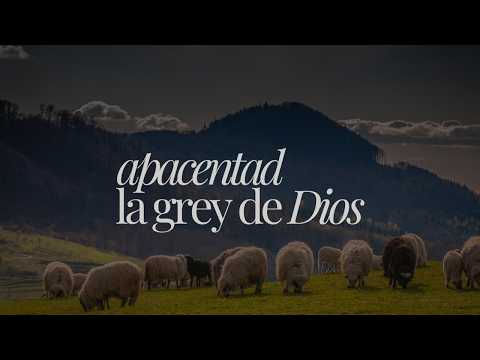
El mensaje empieza en el minuto 35:36.
Ver en YouTubeEstudio completo en español
Introducción
“Obedeced a vuestros pastores, y sujetaos a ellos; porque ellos velan por vuestras almas, como quienes han de dar cuenta.”
La expositora reconoce de entrada que este tema no ha sido frecuente en su predicación. El estudio parte de la condición de la oveja —mansa, no la más fuerte, incapaz de reconocer el risco— para explicar por qué existe el pastor, y desde ahí desmenuza el versículo frase por frase. Lo completa con 1 Tesalonicenses 5:12-13 y con 1 Pedro 5:1-4, donde queda fijado el límite: la autoridad del pastor está subordinada a Cristo y a las Escrituras, y la iglesia pertenece a Dios, no al pastor.
I.Un tema poco tratado
A. Este tema no ha sido muy presente en su predicación: hay otros versículos que se le hacen más fáciles.
B. Uno decide si toma o no la posición de oveja: ¿voy a una iglesia porque sí, o porque quiero buscar a Dios?
C. "Hay cosas que yo le digo al Señor y el Señor no resuelve." Eso está en el sistema de nosotros, los mortales.
D. Cuando me convertí llegó el todo a mi vida; y de ahí en adelante, lo que hay es lágrimas, preocupaciones y una batalla constante.
E. Y no me canso de batallar, porque si bajo las manos alguna vez, es un gran peligro para el pueblo.
F. La palabra siempre es efectiva: es la única voz que es como un trueno. Cada versículo estremece nuestro ser y cambia nuestra forma de pensar y de opinar.
G. Tu cuerpo habla de ti en tus acciones: conforme te educas por las Escrituras, así eres tú.
II.El creyente es una oveja
A. A las ovejas las trasquilan y les sacan todo el pelo, porque les pesa y les causa conflicto para moverse bien.
B. No son las más fuertes ni las más determinadas: son mansas.
C. Y por esa condición tienen al pastor frente a ellas con su cayado, la vara larga con la que las tuerce.
D. Porque si quieren agarrar por otro lado, donde hay un risco, no lo reconocen como peligro y se pueden matar.
E. Por eso el pastor tiene que estar pendiente de mantenerlas unidas, para poder guiarlas.
F. Y fíjense bien: no es que el pastor tenga empeño en pasar día y noche velando. Es la necesidad de la oveja de ser cuidada.
G. "Yo sé tomar decisiones." A veces sí y a veces no. Hay veces en que la oveja no sabe cuál debe ser su comportamiento; por eso el pastor la guía.
H. ¿Y cómo se la guía? A través de la Biblia: cada mensaje es una enseñanza para guiar a las ovejas.
I. A través de la enseñanza la oveja sabe cómo debe actuar, cómo debe vivir y cómo desarrollar su persona.
J. Y eso es un servicio: los pastores deben servir al rebaño con humildad, con fidelidad y siendo ejemplo, sabiendo que un día rendirán cuenta a Dios.
III."Obedeced a vuestros pastores" (Hebreos 13:17)
A. Se refiere a atender y seguir la dirección espiritual de quienes Dios ha puesto para enseñar, cuidar y guiar a la iglesia.
B. Siempre que su enseñanza esté de acuerdo con lo que la palabra de Dios establece.
C. "Yo no puedo hablar como un papagayo. Todo lo que predico y enseño está siempre citado por los versículos bíblicos."
D. No es lo que creo ni lo que pienso que sea mejor: es de acuerdo a las Escrituras, y se lee para todas las ovejas por igual.
E. No hay preferencia: grande y chiquito, todo por igual, porque es para el rebaño.
F. Usted llega sintiendo que su problema es el más grande de la vida; y al escuchar la palabra va conociendo primero la voz del pastor.
G. Y la oveja la asimila, porque le toma cariño al escuchar la voz del pastor.
IV."Sujetaos a ellos"
A. Habla de una actitud de respeto, de cooperación y de disposición para aceptar el liderazgo espiritual.
B. No de una obediencia ciega ni absoluta: la autoridad de los pastores está subordinada a Cristo y a las Escrituras.
C. "Yo tengo que vivir bajo las reglas de las Escrituras. No es lo que yo pienso ni lo que yo quiero."
D. Esto no es venir a despotricar y a hablar lo que se quiera: es conforme a las Sagradas Escrituras.
E. Y es para conocer la verdad, para ser obedientes, para ser personas que vean bien, y para tener contacto: cielo, Dios y nosotros.
V."Porque ellos velan por vuestras almas"
A. "Yo velo por tu alma; no velo por tu pelo ni por tu forma de caminar: por tu alma."
B. Los pastores tienen la responsabilidad de cuidar espiritualmente el rebaño: enseñando, exhortando y protegiendo a la iglesia.
C. "Como quienes han de dar cuenta": los líderes responderán ante Dios por la manera en que ejercieron ese cuidado.
D. Eso hace que su responsabilidad sea más seria. "Mientras preparaba este estudio, más pesada se me hacía."
E. Es lo único en la tierra de lo que se va a dar cuenta a Dios: "cuando yo suba delante de Dios, voy a tener que dar cuenta de todos ustedes".
F. Y también de otros que no están aquí, que están en otros países y siguen la predicación para educar sus vidas como ovejas.
VI."Para que lo hagan con alegría"
A. Cuando la congregación coopera y recibe la enseñanza con humildad, el ministerio pastoral se ejerce con gozo.
B. Y en cambio la resistencia constante y la rebeldía entristecen el ministerio.
C. "Porque esto no os es provechoso": una relación conflictiva entre la congregación y sus pastores perjudica el crecimiento espiritual de la iglesia.
VII."Reconoced a los que trabajan" (1 Tesalonicenses 5:12-13)
A. Estos versículos enseñan cómo debe ser la relación entre la iglesia y sus líderes espirituales.
B. "Reconoced a los que trabajan entre vosotros": valorar y apreciar a quienes sirven fielmente a la obra del Señor.
C. Porque el liderazgo espiritual implica esfuerzo, dedicación y mucho sacrificio.
D. "Os presiden en el Señor": quienes ejercen dirección espiritual, no por intereses personales, sino bajo la autoridad de Cristo.
E. "Y os amonestan": parte del ministerio es enseñar, corregir y exhortar cuando es necesario, con el propósito de edificar y conducir a la madurez.
F. "Que los tengáis en mucha estima y amor por causa de su obra": no por nada más, por causa de la obra.
G. Porque la obra es constante: hay dificultades, tristeza, enfermedad, problemas en los matrimonios, en los padres y en los hijos.
H. El respeto y el afecto hacia los pastores no deben basarse en su personalidad, sino en la labor que realizan para el bien de la iglesia.
I. "Tened paz entre vosotros": la paz y la unidad son el resultado de relaciones sanas, entre los creyentes y con los líderes.
J. Si hay una queja, se cita a la iglesia: porque si hay algo que corregir, se corrige allí, y allí no se esconde nada.
K. Allí se reprende, se corrige, se llora, y se unen en la guerra. Nadie es grande ni pequeño: todos son hermanos en la fe.
VIII."Apacentad la grey de Dios" (1 Pedro 5:1-3)
A. La iglesia pertenece a Dios, no al pastor.
B. El llamado del líder es alimentar espiritualmente, proteger y cuidar al pueblo del Señor mediante la enseñanza fiel de la palabra.
C. "No por fuerza, sino voluntariamente": el ministerio debe ejercerse por amor a Dios y a las personas, no por obligación ni por presión.
D. "Llevarte a ti a una obligación o a una presión, no. Ahí no está Dios; eso ya son sectas."
E. "No por ganancia deshonesta, sino con ánimo pronto": la motivación no debe ser el beneficio económico ni el prestigio, sino el deseo sincero de servir.
F. El pastor no está detrás de las ovejas sacándoles dinero: para eso están las ofrendas, para sostener la iglesia y al pastor.
G. Si Dios quiere mucho, es mucho; y si quiere poco, poco. ¿Quién va a pelear con eso?
H. "No como teniendo señorío": el liderazgo cristiano no es autoritario ni dominante. Jesús enseñó que el mayor debe ser el servidor de todos.
I. "Sino siendo ejemplos de la grey": la mayor influencia de un pastor proviene de su ejemplo de vida; su fe, humildad, integridad y amor respaldan su enseñanza.
J. Y una cosa aprendida de Pablo: cada uno con sus ovejas. ¿Por qué osar donde no soy? ¿Por qué opinar donde no debo?
K. "Yo pertenezco a este lugar y a este altar." Y tampoco habla de sus ovejas con nadie.
IX.Lo que cuesta
A. El pastor no es un juego: es el que más tiene que abstenerse de cosas que las ovejas pueden hacer sin problema.
B. El pastor vive vigilando con el ojo abierto. Siempre hay un sentir de dolor y de angustia. Si alguien enferma, "yo enfermo".
C. La recompensa está en el cielo, no en la tierra: "aquí yo vivo con la espada en la mano".
D. Cuando ve a los niños, los está midiendo: les conoce el sonreír, cuándo se esconden, cuándo son tímidos, cuándo están abatidos.
E. Nada de eso le es indiferente: es su pasión, su entrega, su día y su noche.
F. Y a veces el cuerpo colapsa físicamente: las piernas llegan a paralizarse, y en los exámenes no aparece nada.
G. Y entonces se detiene: "yo no puedo estar al son de los demás, porque yo soy la que guío a la iglesia".
H. "Yo no he hecho altar para cada cual: yo he hecho altar para Jehová."
I. Y lo que pide no es lástima: "no es asunto de lástima, es asunto de comprensión. Yo no soy víctima: yo soy pastora".
X.La corona (1 Pedro 5:4)
A. "Y cuando aparezca el Príncipe de los pastores, vosotros recibiréis la corona incorruptible de gloria."
B. Es una promesa dirigida a los pastores y ancianos que sirven fielmente al Señor.
C. "Cuando aparezca" se refiere al regreso de Jesucristo: la esperanza del creyente y del pastor está en la segunda venida.
D. "El Príncipe de los pastores": Jesucristo es el pastor supremo; todos los demás son siervos bajo su autoridad y deben seguir su ejemplo de amor.
E. "Eso es lo que yo tengo que seguir: no lo que el ser humano espera de mí."
F. "Recibiréis la corona incorruptible": una recompensa eterna que no se marchita ni se deteriora, a diferencia de las coronas terrenales.
G. Si padecemos algo por Cristo, sin recompensa no nos vamos a quedar.
H. Y cuenta una revelación —no un sueño—: estando dormida vio la imagen de Jesús, sin techo, y un ángel de túnica blanca a quien Jesús le decía "anota", y él anotaba.
I. Y sentía que se le salía el alma del cuerpo, y pensaba que si salía completa, moría; así que volvió a acomodarse. "Nunca se me va a olvidar."
J. En el contacto con Dios se lleva a ganar.
XI.Aplicación
A. No se maravillen del oficio del pastor: maravíllense de que Dios quiera usar a una simple mortal para enseñar el libro más leído de la tierra.
B. Verifique lo que se le enseña contra la Escritura: la autoridad del pastor está subordinada a Cristo y a la palabra.
C. Reconozca y estime a quien trabaja entre ustedes, no por su personalidad, sino por causa de la obra.
D. Tenga paz: la resistencia constante entristece el ministerio y no es provechosa para nadie.
E. Y recuerde que nadie tiene nada que presumir frente a otro: hoy cae uno y mañana cae otro.
F. Porque lo que vale es llegar a oír: "en lo poco fuiste fiel, en lo mucho te pondré; entra en el gozo de tu Señor".
Iglesia Cristiana Mega Zoé · Pastora Edermira Cruz
Feed the Flock of God
Hebrews 13:17
Introduction
“Obey them that have the rule over you, and submit yourselves: for they watch for your souls, as they that must give account.”
The expositor admits at the outset that this subject has not been frequent in her preaching. The study starts from the nature of the sheep —meek, not the strongest, unable to recognize the cliff— to explain why there is a shepherd at all, and from there works through the verse phrase by phrase. It is completed with 1 Thessalonians 5:12-13 and 1 Peter 5:1-4, where the limit is set: a pastor's authority is subordinate to Christ and to the Scriptures, and the church belongs to God, not to the pastor.
I.A subject seldom treated
A. This subject has not been much present in her preaching: there are other verses that come easier.
B. A person decides whether to take the place of a sheep: do I go to a church just because, or because I want to seek God?
C. "There are things I tell the Lord and the Lord does not resolve." That is in the system of us mortals.
D. When I was converted, everything came into my life; and from then on what there is, is tears, worries, and a constant fight.
E. And I do not tire of fighting, because if I ever lowered my hands, it would be a great danger for the people.
F. The word is always effective: it is the only voice that is like thunder. Every verse shakes our being and changes how we think and judge.
G. Your body speaks of you in your actions: as you are taught by the Scriptures, so you are.
II.The believer is a sheep
A. Sheep are shorn and all their wool taken off, because it weighs on them and makes it hard for them to move well.
B. They are not the strongest nor the most resolute: they are meek.
C. And because of that they have the shepherd in front of them with his crook, the long rod with which he turns them.
D. For if they want to go off another way, where there is a cliff, they do not recognize it as danger and can kill themselves.
E. That is why the shepherd must be watching to keep them together, so he can guide them.
F. And mark this: it is not that the shepherd is keen to spend day and night watching. It is the sheep's need to be cared for.
G. "I know how to make decisions." Sometimes yes and sometimes no. There are times when the sheep does not know how it should behave; that is why the shepherd guides it.
H. And how is it guided? Through the Bible: every message is a teaching to guide the sheep.
I. Through the teaching the sheep learns how to act, how to live, and how to develop as a person.
J. And that is a service: pastors must serve the flock with humility, with faithfulness and by example, knowing they will one day give account to God.
III."Obey them that have the rule over you" (Hebrews 13:17)
A. It means attending to and following the spiritual direction of those God has set to teach, to care for and to guide the church.
B. So long as their teaching agrees with what the word of God lays down.
C. "I cannot talk like a parrot. Everything I preach and teach is always cited from the Bible verses."
D. It is not what I believe nor what I think would be best: it is according to the Scriptures, and it is read for all the sheep alike.
E. There is no favouritism: great and small, all alike, because it is for the flock.
F. You arrive feeling your problem is the greatest in the world; and as you hear the word you first come to know the shepherd's voice.
G. And the sheep takes it in, because it grows fond of hearing the shepherd's voice.
IV."And submit yourselves"
A. It speaks of an attitude of respect, of cooperation and of readiness to accept spiritual leadership.
B. Not of a blind or absolute obedience: the authority of pastors is subordinate to Christ and to the Scriptures.
C. "I have to live under the rules of the Scriptures. It is not what I think nor what I want."
D. This is not coming here to rant and say whatever one pleases: it is according to the Holy Scriptures.
E. And it is so we may know the truth, be obedient, be people who see clearly, and have contact: heaven, God and us.
V."For they watch for your souls"
A. "I watch for your soul; I do not watch your hair or how you walk: your soul."
B. Pastors have the responsibility of caring spiritually for the flock: teaching, exhorting and protecting the church.
C. "As they that must give account": the leaders will answer before God for the manner in which they exercised that care.
D. That makes their responsibility more serious. "While I was preparing this study, it grew heavier on me."
E. It is the one thing on earth of which account must be given to God: "when I stand before God, I will have to give account of all of you."
F. And of others who are not here, in other countries, who follow the preaching to shape their lives as sheep.
VI."That they may do it with joy"
A. When the congregation cooperates and receives the teaching with humility, the pastoral ministry is exercised with joy.
B. And on the other hand, constant resistance and rebellion sadden the ministry.
C. "For that is unprofitable for you": a conflicted relationship between the congregation and its pastors harms the church's spiritual growth.
VII."Know them which labour among you" (1 Thessalonians 5:12-13)
A. These verses teach how the relationship between the church and its spiritual leaders should be.
B. "Know them which labour among you": to value and appreciate those who serve the Lord's work faithfully.
C. For spiritual leadership involves effort, dedication and much sacrifice.
D. "And are over you in the Lord": those who exercise spiritual direction, not out of personal interest, but under the authority of Christ.
E. "And admonish you": part of the ministry is to teach, correct and exhort when needed, with the purpose of building up and leading to maturity.
F. "Esteem them very highly in love for their work's sake": not for anything else, for the work's sake.
G. For the work is constant: there are difficulties, sorrow, illness, trouble in marriages, in parents and in children.
H. Respect and affection for pastors should not rest on their personality, but on the labour they carry out for the good of the church.
I. "Be at peace among yourselves": peace and unity are the result of healthy relationships, among believers and with the leaders.
J. If there is a complaint, the church is called together: because if there is something to correct, it is corrected there, and nothing is hidden.
K. There people are rebuked, corrected, and weep, and unite for the fight. No one is great and no one is small: all are brethren in the faith.
VIII."Feed the flock of God" (1 Peter 5:1-3)
A. The church belongs to God, not to the pastor.
B. The leader's calling is to feed spiritually, to protect and to care for the Lord's people through faithful teaching of the word.
C. "Not by constraint, but willingly": the ministry must be exercised out of love for God and for people, not out of obligation or pressure.
D. "To bring you to an obligation or a pressure, no. God is not there; that is already a sect."
E. "Not for filthy lucre, but of a ready mind": the motive must not be financial gain nor personal prestige, but a sincere desire to serve.
F. The pastor is not behind the sheep getting money out of them: that is what the offerings are for, to sustain the church and the pastor.
G. If God wills much, it is much; and if He wills little, little. Who is going to argue with that?
H. "Neither as being lords": Christian leadership is not authoritarian or domineering. Jesus taught that the greatest must be the servant of all.
I. "But being ensamples to the flock": a pastor's greatest influence comes from his example of life; his faith, humility, integrity and love back up his teaching.
J. And a thing learned from Paul: each one with his own sheep. Why go where I do not belong? Why give an opinion where I should not?
K. "I belong to this place and to this altar." And she does not speak of her sheep with anyone either.
IX.What it costs
A. The pastorate is no game: the pastor is the one who must abstain most from things the sheep may do freely.
B. The pastor lives watching with his eye open. There is always a sense of pain and of anguish. If someone falls ill, "I fall ill."
C. The reward is in heaven, not on earth: "here I live with the sword in my hand."
D. When she sees the children, she is taking their measure: she knows their smile, when they hide, when they are shy, when they are downcast.
E. None of that is indifferent to her: it is her passion, her self-giving, her day and her night.
F. And sometimes the body collapses physically: her legs go numb, and the tests show nothing.
G. And then she stops: "I cannot go at everyone else's pace, because I am the one who guides the church."
H. "I have not built an altar for each person: I have built an altar for the LORD."
I. And what she asks is not pity: "it is not a matter of pity, it is a matter of understanding. I am not a victim: I am a pastor."
X.The crown (1 Peter 5:4)
A. "And when the chief Shepherd shall appear, ye shall receive a crown of glory that fadeth not away."
B. It is a promise addressed to pastors and elders who serve the Lord faithfully.
C. "When He shall appear" refers to the return of Jesus Christ: the hope of the believer and of the pastor rests on the second coming.
D. "The chief Shepherd": Jesus Christ is the supreme shepherd; all others are servants under His authority and must follow His example of love.
E. "That is what I have to follow: not what people expect of me."
F. "A crown of glory that fadeth not away": an eternal reward that does not wither or decay, unlike all earthly crowns.
G. If we suffer anything for Christ, we will not be left without reward.
H. And she tells of a revelation —not a dream—: asleep, she saw the figure of Jesus, with no roof above, and an angel in a white robe to whom Jesus said "write it down," and he wrote.
I. And she felt her soul leaving her body, and thought that if it came all the way out she would die; so she settled back in. "I will never forget it."
J. In contact with God, one comes out winning.
XI.Application
A. Do not marvel at the office of pastor: marvel that God would use a simple mortal to teach the most read book on earth.
B. Check what you are taught against Scripture: a pastor's authority is subordinate to Christ and to the word.
C. Know and esteem the one who labours among you, not for his personality, but for the work's sake.
D. Be at peace: constant resistance saddens the ministry and profits no one.
E. And remember that no one has anything to boast of before another: today one falls, and tomorrow another.
F. For what counts is to hear: "thou hast been faithful over a few things; enter thou into the joy of thy lord."
Iglesia Cristiana Mega Zoé · Pastora Edermira Cruz
Apacentad la grey de Dios
Hebreos 13:17
“Obedeced a vuestros pastores, y sujetaos a ellos; porque ellos velan por vuestras almas, como quienes han de dar cuenta.”
Este tema no ha sido muy presente en la predicación de la pastora. El creyente es una oveja: mansa, no la más fuerte, y no reconoce el risco; por eso existe el pastor, y por eso un día dará cuenta de todos. Estos son los puntos del miércoles, para llevarlos toda la semana.
- A la oveja la trasquilan porque el pelo le pesa; es mansa, no la más fuerte, y no reconoce el risco. El pastor no vela día y noche por empeño: es la necesidad de la oveja de ser cuidada.
- Obedecer a los pastores es seguir la dirección de quien Dios puso para enseñar, siempre que enseñe conforme a la Palabra. Todo lo que se predica está citado por versículos, y se lee para todas las ovejas por igual.
- Sujetarse no es obediencia ciega ni absoluta: la autoridad del pastor está subordinada a Cristo y a las Escrituras. «Yo velo por tu alma; no por tu pelo ni por tu forma de caminar.»
- Los pastores han de dar cuenta a Dios de cómo cuidaron el rebaño; por eso, cuando la iglesia recibe la enseñanza con humildad, el ministerio se ejerce con gozo, y la rebeldía constante lo entristece.
- Reconoced a los que trabajan y tenedlos en estima por causa de su obra, no por su personalidad. Y tened paz: si hay algo que corregir, se corrige en la iglesia, y allí no se esconde nada.
- La iglesia pertenece a Dios, no al pastor. Se apacienta voluntariamente, no por presión, que eso ya son sectas; no por ganancia, no con señorío, sino siendo ejemplo, y cada uno con sus ovejas.
- Cuando aparezca el Príncipe de los pastores habrá corona incorruptible. Si padecemos algo por Cristo, sin recompensa no nos vamos a quedar; lo que vale es oír «en lo poco fuiste fiel».
Verifique contra la Escritura lo que se le enseña, y recíbalo con humildad: la resistencia constante entristece el ministerio y no es provechosa para nadie.
Iglesia Cristiana Mega Zoé · Pastora Edermira Cruz
La Oveja y el Risco
Hebreos 13:17
Para leer en voz alta con los niños
“Obedeced a vuestros pastores, y sujetaos a ellos; porque ellos velan por vuestras almas, como quienes han de dar cuenta.”
Así lo dice la Biblia. En palabras sencillas: hazle caso a tu pastor y respétalo, porque él cuida tu alma y un día dará cuenta a Dios de ti. La pastora dijo que las ovejas no ven el risco: por eso el pastor lleva un cayado, una vara larga, para torcerlas antes de que caigan.
- Tú eres una oveja de Dios. Las ovejas no son las más fuertes: son mansas, y a veces no saben por dónde ir. Por eso tienen pastor.
- El pastor guía a las ovejas con la Biblia. Cada mensaje en la iglesia es como el cayado: te enseña por dónde caminar y por dónde no.
- Hacerle caso al pastor no es obedecer a ciegas. El pastor también está debajo de Jesús y de la Biblia; lo que enseña tiene que estar en la Palabra.
- La pastora dijo: «yo velo por tu alma, no por tu pelo». Ella conoce tu sonrisa, cuándo te escondes y cuándo estás triste; nada de eso le da igual.
- Cuando recibes la enseñanza con humildad, el pastor trabaja con alegría. Cuando siempre te resistes y te rebelas, lo pones triste, y eso te hace daño a ti.
- La iglesia es de Dios, no del pastor. Y un día, cuando Jesús vuelva, los pastores fieles recibirán una corona que nunca se marchita.
¿Qué te acuerdas de lo que enseñó la pastora?
Esta semana, cada noche, ora por tu pastora, porque ella vela por tu alma. Hazlo todos los días hasta el próximo domingo.
Iglesia Cristiana Mega Zoé · Pastora Edermira Cruz